Dhamma · Reflection · Statements · Peaceful Communication
Archive and publication page · Use Search, Topics, or the Month & Year archive to locate related materials.

Office Of Siridantamahapalaka: October 2024

Chronological Archive

သင်ကြားရေး ၊ သုတေသန နဲ့ ပုံနှိပ်ထုတ်ဝေရေး

သင်ကြားရေး သုတေသန ပုံနှိပ်ထုတ်ဝေရေး အုပ်ချုပ်ရေးဆိုပြီး အခြေခံအားဖြင့် ပညာရေး သဘောသဘာ၀ ၄ ခု ကို တည်ထားလိုက်တယ်ဆိုပါစို့။ ခေါင်းစဉ်ကတော့ ၄ ခုကွဲနေပေမယ့် တစ်ခုနဲ့တစ်ခုဟာ ချိတ်ဆက်နေတာမျိုးပါ။ ပေါ်လစီ ဆိုတဲ့ စကားရပ်ဟာ သင်ကြားရေး၊သုတေသန ၊ပုံနှိပ်ထုတ်ဝေရေး၊အုပ်ချုပ်ရေး တို့ ခရီးဆက်နိုင်ဖို့ အချုပ်််ဖြစ်ပါတယ်။ ဘယ်လိုစနစ်နဲ့ သွားကြမလဲဆိုတဲ့ System Set Up ဟာ Institution ရဲ့ ပေါ်လစီအပေါ်မူတည်ပါတယ်။ The Next 20 Years Later မှာ ဘာအသီးအပွင့်ကိုမြင်ချင်လဲဆိုတဲ့ အနာဂတ်အမြင် ပေါ်မူတည်ပြီး ပန်းတိုင် ကိုမရောက်ရောက်အောင် Objective တွေ Mission တွေ ချမှတ်ကြရတာဖြစ်ပါတယ်။ ဒီကနေ့မှာတော့ အခြားအကြောင်းအရာတွေထက် သင်ရိုးညွန်းတမ်း ၊ ပြဌာန်းစာအုပ် ၊ ဆရာကိုင် ၊ ဆရာလမ်းညွန် ၊ သင်ကြားရေးစီမံချက် ၊ အကဲဖြတ်စိစစ်သုံးသပ်ခြင်းဆိုတဲ့ အကြောင်းအရာကို အဓိက HighLight ထား ပြီး တင်ပြ မျှဝေပေးသွားမှာဖြစ်ပါတယ်။ အောက်က တွဲတင်ထားတဲ့ တစ်နာရီစာ သင်ကြားရေး (သင်ခန်းစာ စီမံချက်) ကိုနမူနာကြည့်ခြင်းအားဖြင့် စာရေးသူ ပေးချင်တဲ့ ပညာရေးသဘောတရားတွေ ပညာရေးသဘာ၀တွေ ပညာရေးစိတ်ပညာတွေ ကို သင်ကြားရေး ၊ သုတေသန နဲ့ ပုံနှိပ်ထုတ်ဝေရေးတို့အတွက် ဘယ်ပုံဘယ်နည်း Link ဖြစ်နေတယ်ဆိုတာ ခန့်မှန်းသိရှိနိုင်မယ်လို့ ယူဆပါတယ်။ ပြဌာန်းစာအုပ်တစ်အုပ်ကိုရေးသားတော့မယ်ဆိုရင် ထည့်သွင်းစဉ်းစားစရာ အဓိကအချက်တွေ အများကြီးထဲက အချို့သော ဥပမာများကိုသာ ဒီကနေ့မှာ မျှဝေပေးသွားမှာဖြစ်ပါတယ်။ Expanding the Policy Framework ချတဲ့အခါမှာ ၁. encompassing accessibility, ၂. non-discrimination ၃. respectful behavior across all learning environments. ရေးတဲ့ ပြဌာန်းစာအုပ်ပါအချက်အလက် တွေ ၊ သင်ကြားရေးစီမံချက်တွေ ၊ဟောပြောပို့ချမူ( Teacher Training and Manual Guide Line) တွေမှာ အပေါ်က ဖေါ်ပြထားတဲ့ အချက်ကြီး ၃ ချက်ကို အခြေခံတည်ဆောက်ရပါတယ်။ လူမျိုးရေး ၊ အသားအရောင် ကျားမ စသည့် ခွဲခြား ဆက်ဆံမူ တွေ မဖြစ်စေတဲ့ ပြဌာန်းစာအုပ်များဖြင်္စအောင်ကျိုးစားရပါတယ်။ တနည်းအားဖြင့် Peace ကို ဦးတည်တဲ့ ရည်ရွယ်ချက်မျိုးဖြစ်အောင် ရေးသားဖို့လိုအပ်ပါတယ်။ Enhanced Ground Rules for Classrooms and Beyond ၁. collaboratively created ၂. enforced using restorative practices, ၃. focusing on learning rather than punishment. ဆုပေးဒဏ်ပေစနစ်ကိုကျင့်သုံးတယ်ဆိုပေမယ့် နာမ်ပိုင်းဆိုင်ရာ ကိစ္စရပ်တွေဖြစ်တာကြောင့် စာမရတာ ၊ မမှတ်မိတာ ၊ စတဲ့ကိစ္စတွေပေါ်ပေါက်လာတဲ့အခါ ရုပ် နဲ့ စိတ်တွေကို နာကျဉ်စေတဲ့ ပြစ်ဒဏ် ချဆုံးမမူမျိုး လူရှေ့သူရှေ့အရှက်ခွဲ ခံရတာ ( သူများအားနည်းချက်ကို အခွင့်ကောင်းယူပြီး အကွက်ဝင်လာရင် ဖိနှိပ်လိုက်မယ်ဆိုတဲ့ အလေ့အကျင့်ကို ကျင့်ပေးလိုက်သလို ၊ တစ်ခုခုဖြစ်လာတိုင်း အာဏာသုံး အင်အားသုံး ညှင်းပန်း မူ ဘက်ကို မသိမသာ သင်ယူမူရသွားတာမျိုး) မဖြစ်ရလေ​ေအာင် အခန်းဆုံးစစ်ဆေးမူတွေမှာ နားလည်မူနဲ့ တတ်ကျွမ်း သိရှိမူ ကို အသားပေးတဲ့ စိစစ်အကဲဖြတ်သုံးသပ်မူ ( Exam ) စနစ်မျိုး ကျင့်သုံးသင့်ပါတယ်။ စာသင်ကြားပေးရုံသာမက စာရိတ္တ ကိုပါ ပဲ့ကိုင်ရာ ဌာန ဖြစ်တဲ့အတွက် Individual Skills Development တွေတင်မက Group Wok , Pair Work , Collaborative Work တေွွွွကို သင်ခန်းစာ သင်ကြားသူတွေက ဆောင်ရွက်ပေးမှသာ လူနေမူဘ၀မှာ သူ့အမြင် ကိုယ့်အတွေး မတူညီတဲ့ Background , Religious , Race စတဲ့ မတူကွဲပြားမူတွေမှာ ငြိမ်းချမ်းစွာ ပြောဆိုဆက်ဆံရေး Step Up and Step Up , Mutual Respect and Understanding ဆိုတဲ့ Life Skills တွေကို ပါ ငယ်ငယ်ကတည်းက ​Training လုပ်ပေးဖို့ရာ ဆရာတွေ ဆီမှာ အရည်အသွေးတွေ အရည်အချင်းတွေရှိနေဖို့လိုအပ်ပါသည်။ ဒါတွေက လောက နိုင်ငံ ဥပဒေတွေနဲ့ပါ ချိတ်ဆက်နေတဲ့ သဘောတရားတွေဖြစ်ပါတ.် ပြဌာန်းစာအုပ် တွေရေးရတာ လွယ်သလားဆိုတော့ ဘယ်လွယ်မလဲ တော်ရုံ ဗဟုသုတ တော်ရုံအတွေ့အကြုံနဲ့ ရေးလို့ရတဲ့အရာ မဟုတ်ပါဘူး သင်ကြားရေးအတွေ့အကြုံ ၊ ဆရာဖြစ်မွန်းမံသင်တန်းပို့ချဖူးတဲ့အတွေ့အကြုံ ၊ စီမံခန့်ခွဲမူအတွေ့အကြုံ ၊ သင်ရိုးညွှန်းတမ်းရေးဆွဲဖူးတဲ့အတွေ့အကြုံ ၊ စိစစ်အကဲဖြတ်သုံးသတ်ခြင်းလုပ်ငန်းအတွေ့အကြုံ သုတေသနအတွေ့အကြုံ ပုံနှိပ်ထုတ်ဝေရေးအတွေ့အကြုံ စသည်ဖြင့် အဲဒီနယ်ပယ်တွေမှာ အတွေ့အကြုံ နဲ့ ဆည်းဖူးမူ အထိုက်အလျောက်မှ မရှိနေပဲနဲ့ ဒါတွေကိုရေးသားဖို့ဆိုတာ မဖြစ်နိုင်ပါဘူး Professional အလုပ်ဖြစ်သလို Expert ဖြစ်နေရုံမကဘူး ဇွဲ ဝီရိယ ၊ စိတ်ရှည်မူ ၊ သည်းခံမူ အပြင် စေတနာ ထက်သန်တဲ့ သူတွေ မှ ဆောင်ရွက်နိုင်တာမျိုးပါ အင်မတန် အသေးစိတ်သလို အနုလဲစိတ်ပါတယ် ဘက်ဘောင်းစုံ Sector ပေါင်းစုံကနေ တွေးတောနိုင်တဲ့ဉာဏ်ပညာ လဲရှိဖို့လိုပါသေးတယ် စာရေးသူဟာ Expert လားဆိုတော့မဟုတ်ပါဘူး ကြိုးစားလျှောက်လှမ်းနေဆဲ သာမာန်ရဟန်း ငယ်တစ်ပါးမျှသာဖြစ်ပါတယ် ဒါတွေဟာ ဒီနိုင်ငံ ဒီသာသနာရဲ့အနာဂတ် နဲ့ တိုက်ရိုက်သက်ဆိုင်နေတာမျိုး မလွယ်ပါဘူး ၊ ခက်သလားဆိုတော့ လဲမခက်ပါဘူး Building Ethical Awareness ဒါကလဲ ထည့်သွင်းစဉ်းစားရတဲ့ံအချက်အလက်တွေဖြစ်ပါတယ် ၁. through real-life scenarios ၂. empathy exercises ၃. a structured ethical decision-making model. ဗြဟ္မစိုရ် တရား ၄ ပါးထွန်းကားတဲ့ ဆုံးဖြတ်ချက် ချနိုင်မူမျိုးတွေ သင်တန်းသားတွေရဲံ နေ့စဉ်လူနေမူဘ၀တွေမှာ ဖြစ်ဖို့ရာ သင်ခန်းစာ သင်ကြားရေး စီမံအုပ်ချုပ်ရေး တွေဟာ အမြဲတမ်းမျက်ခြေမပျက်ပဲ ညွန်းတမ်းတွေကို ရေးသားသီကုံးကြရတာမျိုးပါ။ Refining the Code of Conduct ကိုလဲ ထည့်သွင်းစဉ်းစားရပါတယ် ၁. to include moral ethics 2. zero tolerance for harassment 3. recognition of positive behavior. အဟိံသ ဆိုတဲ့ မူဝါဒ ယောနိသော မနဿိကာရ ဆိုတဲ့ စိတ်တွေဖြစ်အောင် Logical and Critical Thinking Class ဖြစ်အောင်ဦးတည်ရေးဖွဲံရတာမျိုးပါ။ ၂၀၂၄ ခုနှစ်ကိုရောက်နေပြီဖြစ်တဲ့အတွက် ဒီလို ခေတ် ဒီလို အိုင်တီစနစ်မျိုးမှာ Applying International and Child Law Principles တွေကို ပါ ထည့်သွင်းစဥိးစားထားမှ ဒီသာသနာ နိုင်ငံတကာ ကို ပြန့်ပွားအောင် ဆောင်ရွက်တဲ့အခါမယ် သူများတိုင်းတာတဲ့ ပေတံ တွေ စံ နှုန်းထားတွေနဲ့ကိုက်ညီနေအောင် နိုင်ငံတကာနဲ့ ဘောင်ဝင်တန်းဝင်တဲ့ ပြဌာန်းချက်စာအုပ်တွေဖြစ်ဖို့လိုပါတယ်။ မူရင်း ကျမ်းစာ ဘုရားဟော အဆုံးအမများကိုတော့ နည်းနည်းမှ အပွန်းအပဲ့ အထိအရှမခံပဲ Instituitional Culture တွေ နဲ့ကိုက်ညီတဲ့ 1. Integrating international and child law principles 2.using age-appropriate language and positioning educators as student advocates. ဆိုတဲ့ ပေါ်လစီကို ထည့်သွင်းရေးသားရပါတယ်။ Deepening Textbook Content တွေမှာ တော့ မူရင်းဘုရားဟော ဒေသနာတော်တွေကို အောက်ဖေါ်ပြပါ ဗျူဟာတွေနဲ့ သင်ကြားနိုင်ဖို့ရာ ရေးသားရပါသေးတယ် ၁. with a thematic structure ၂. diverse case studies ၃. project-based learning. တွေဖြစ်အောင် တနည်းအားဖြင့် Active Learning ပတ်ဝန်းကျင်ဖြစ်အောင် Text Book Content တွေကို Create လုပ်တတ်တဲ့ ဉာဏ်ပညာ ရှိဖို့လဲလိုအပ်ပါသေးတယ်။ Lesson Plan Expansion အနေနဲ့ သင်ခန်းစာပြီးသွားတဲ့အချိန်မယ် ဆက်စပ်တဲ့ စာအုပ်စာတမ်းတွေကို အကြံပြုလမ်းညွန်ပေးတာ အခြားသော တင်ဆက်ပုံမျိုးနဲ့သူတို့ဘာသာသူတို့ တီထွင်ဖန်တီးတင်ဆက်တဲ့ ပုံမျိုးနဲ့ How To Apply on Futrue ဆိုတဲ့ Apply Pratical တွေကို ဖေါ်ဆောင်ပေးနိုင်ခြင်းအား ဖြင့် အနာဂတ် သာသနာအတွက် ခေါင်းဆောင်မူ အတတ်ပညာတွေ တိုးပွားလာမှာလို့ယုံကြည်ပါတယ် ၁. incorporating reflective journaling ၂. role-playing ၃. collaborative group work. ဒါလေးတွေက အဲဒီအတွက် နမူနာလေးတွေပါ။ အုပ်ချုပ်သူတွေအနေနဲ့ Teacher Manual Handbook Details ကို ပြဌာန်းပေးထားရမှာဖြစ်သလို သင်ထောက်ကူပစ္စည်းတွေ ကိုလဲ စိတ်ကြိုက် တီထွင် ပေးခြင်း ၊ Creative Work ဖြစ်အောင် Supporting ပေးခြင်း စတာတွေစဉ်ဆက်မပြတ် တွေ့ဆုံဆွေးနွေးအဖြေရှာပေးနေဖို့ ရာ လိုအပ်လှပ်တယ်။ ၁. including guidance on sensitive topics ၂. alternative assessment methods ၃. resources for new teachers. Regular Meeting တှေ ကို ကြောငျးသား ၊ဆရာ ၊ အုပျခြုပျမူ စီမံခနျံခှဲမူတှေ နဲ့ ပုံမှနျတှေံဆုံအဖွရှောမူ စနစျမြိုးတညျထောငျဖို့ရာလိုအပျပါတယျSuggestion Box တှေ တညျဆောကျတာမြိုးပါ။ Additional Ideas for Engagement and Practical Application ဒါကအင်မတန်အရေးကြီးပါတယ် guest speakersခေါ်ပေးတာတွေ simulated governanceဖြစ်အောင် လုပ်ပေးတာတွေ student-led workshops ပြုခွင့်ပေးတာတွေမျိုးပေါ့ industrial Visit တွေ field Trips တွေ စတာတွေပေါ့ကွယ် ဒီနေ့အတွက်တော့တော်သေးပြီ Sao Dhammasami Teaching With Compassion !

Introduction to Monastic Precepts and Rules for Novices

Text Book ကတော့ပြီးသွားပါပြီ ဆရာကိုင်လမ်းညွှန်ကတော့ လဲပြီးပါပြီ Lesson Plan ကတော့ အနည်းငယ်မျှ အချောသတ် တည်းဖြတ်ရန်ကျန်နေသေး။ အတတ်နိုင်ဆုံးနေ့စဉ်လူနေမူဘ၀မှာ အသုံးချဖြစ်အောင် အခြေခံတဲ့ ပြဌာန်းစာအုပ် ဆရာလမ်းညွန်နဲ့ သင်ကြားမူစီမံချက် စီမံခန့်ခွဲမူ စသည်ဖြင့် အထူးကျိုးစားထားပါသည်။ အဆိုပါ စာအုပ်လေးအုပ်ကို Teacher Training နှင့်အတူတကွအသုံးပြုမှသာလျှင် စာရေးသူပေးလိုသော အနှစ်သာရကို ထိထိမိမိ ရောက်ရှိနိုင်မည်ဖြစ်ပါသည်။ ဒီစာအုပ်လေးအဆုံးသတ်ပြီးရင်တော့ ဝိနည်းပိုင်းပြန်ပြုစုပါမည်။ အဘိဓမ္မာ အတွက်လည်း နောက်လုပ်မည့် ပရောဂျက်အဖြစ် လျာထား ပါသည်။ ငယ် လတ် ကြီး စသည်ဖြင့်ပေါ့ အစဉ်လိုက် အင်္ဂလိပ်လို ပြန်ဆိုရေးသား ကျမ်းပြုစု ပါဦးမည် စာရေးသူအသက်ခန္ဓာတည်မြဲနေသေးရင်ပေါ့ကွယ် Sao Dhammasami Teaching With Compassion

The First Precept – Abstaining from Killing Living Beings

Lesson Plan: Observing the First Precept in Monastic Life Chapter: Introduction to the Ten Precepts Primary Focus: The First Precept – Abstaining from Killing Living Beings 1. Purpose and Objectives Purpose: To introduce the First Precept, emphasizing compassion and respect for all forms of life. Objectives: Comprehend the ethical reasoning behind abstaining from harming living beings. Learn practical applications of the precept in daily monastic life. Reflect on the impact of this precept on one’s own thoughts and actions. 2. Learning Approach for Critical and Logical Thinking Scenario Analysis: Examine real-life situations that challenge adherence to the precept. Discussion: Why does this precept exist? How does it nurture qualities like patience and empathy? Reasoning Practice: Compare the outcomes of observing versus disregarding this precept, particularly in community and personal mindfulness. 3. Experiential Learning Cycle (ELC) Methodology Highlights Experience: Participate in cleaning and other monastic duties, consciously avoiding harm to insects and small creatures encountered. Reflection: Maintain a journal documenting feelings and thoughts when practicing patience and mindfulness during these tasks. Conceptualization: Discuss how the precept relates to compassion as a core Buddhist value. Application: Identify daily tasks where extra care is required to uphold the precept, such as walking mindfully through the garden. 4. Active Learning Strategies Group Reflection Circles: Share personal experiences of challenges and successes in practicing the precept. Role-playing: Simulate scenarios where students must decide the best action aligned with the precept. Peer Feedback: Offer supportive reflections on each other's actions and decisions in relation to observing the precept. 5. Game-Based Learning Activities Mindful Path Challenge: Create a small course where students navigate paths without harming small simulated “living beings” (e.g., using small pebbles or markers). Compassion Dice: Roll a die to encounter various situations; discuss the application of the precept in each scenario. 6. VAKT (Visual, Auditory, Kinesthetic, Tactile) Integration Visual: Observe images or videos of monks practicing careful movement and mindfulness. Auditory: Listen to a guided reflection or chant on compassion and non-harming. Kinesthetic: Engage in mindful walking or cleaning with a focus on avoiding harm. Tactile: Handle representations (such as small stones or sticks) as reminders of creatures to avoid disturbing during activities. 7. Warm-Up Activities (10 minutes) Mindfulness Meditation: Begin with a brief meditation to develop awareness of the surroundings and intention toward kindness. Previous Reflection: Ask students to share any insights they had regarding compassion or patience from the last lesson. 8. Memory Recall of Previous Lesson (5 minutes) Quickly review reflections from the previous precept and discuss any new realizations or applications students observed. 9. Main Lesson (35 minutes) Introduction to the Precept: Explain the ethical, practical, and spiritual dimensions of abstaining from harming living beings. Interactive Discussion: Present hypothetical scenarios (such as encountering insects during chores) and ask students to apply the precept’s principles. Reflection Activity: Students write about a moment they successfully avoided harm to a creature and how it impacted their state of mind. 10. Evaluation Observation: Monitor students’ participation and mindfulness in activities. Self-Reflection: Encourage personal assessment in journals on observing the precept and its influence on daily behavior. 11. Assessment Methods Quiz: Use multiple-choice questions focusing on understanding and application of the precept. Reflection Journals: Collect weekly reflections and offer individual feedback. Participation Score: Base on contributions in group discussions and role-playing exercises. 12. Mood Meter Check (5 minutes) Emotion Mapping: Have students rate and map their emotional state, discussing how the precept might influence their feelings of calm or connection. 13. Suggestion Box (Continuous) Invite students to submit anonymous suggestions or questions about the precept or activities to improve the lesson. 14. Tool Box for Learning Reflection Journal: Track daily experiences and thoughts on practicing compassion toward all living beings. Mindfulness Bell: Use a bell to pause and remind students of the precept. Precept Card: Distribute cards with the precept written as a reminder to carry with them throughout the day. Sao Dhammasami (Teaching With Compassion) Ph.D Candidate ,Peace Studies , iBSC,MCU,Thailand Master Trainer (The European International University)

၁၀ ပါးသီလ အား မိနစ် ၆၀ စာသင်ကြား ပို့ချခြင်းဆိုင်ရာ သင်ကြားရေးစီမံချက်

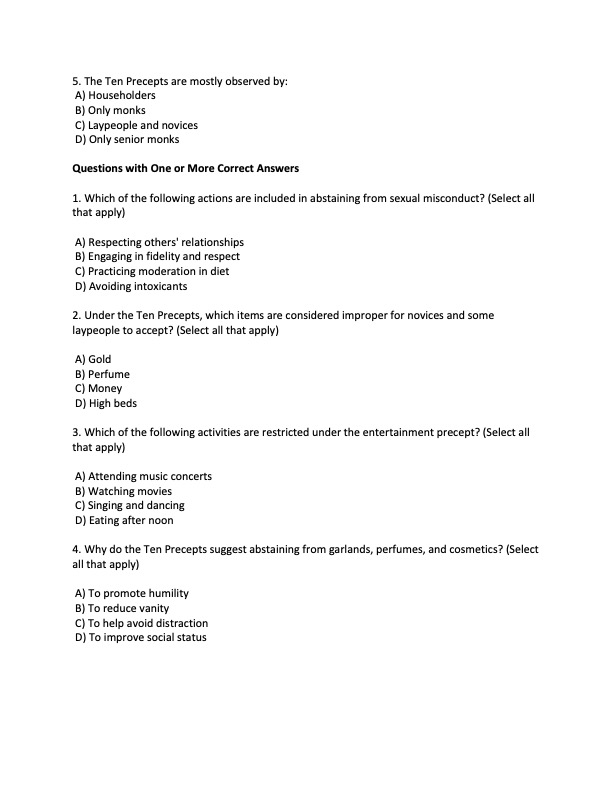
၁၀ ပါးသီလ အား မိနစ် ၆၀ စာသင်ကြား ပို့ချခြင်းဆိုင်ရာ သင်ကြားရေးစီမံချက် (Teacher Guideline Manual Handbook ) ထဲမှ အချို့စာမျက်နှာများ Chapter 1: The Ten Precepts – The Foundation of Ethical Living in Monastic Life The Ten Precepts form the cornerstone of ethical conduct for novices, setting the framework for a life dedicated to self-discipline, compassion, and inner peace. By observing these precepts, novices cultivate a lifestyle that avoids harm, fosters mindfulness, and aligns with the values of the Sangha. Each precept is more than a rule; it is a commitment to respect all life, honor truth, and live with simplicity and humility. This chapter will guide you through each precept, providing insights into their purpose, practical applications, and exercises for deeper understanding. Learning Activities 1. Ethical Dilemmas Discussion - Small group discussions on hypothetical scenarios, focusing on how the Ten Precepts would guide responses. 2. Precept Reflection Exercise - Over ten days, dedicate each day to reflecting on one precept and how it applies to your daily routine. Share reflections with your mentor. The Ten Precepts in Everyday Monastic Life The Ten Precepts are not just rules; they represent a commitment to live ethically, mindfully, and with respect toward oneself and others. In this section, each precept is discussed in depth, exploring the day-to-day situations novices may encounter and offering guidance on how to approach these experiences. 1. Abstaining from Killing Living Beings Daily Life Application: As novices, you may encounter various forms of life while cleaning the monastery, walking through the garden, or even preparing meals. For example, you might see ants or insects on the temple grounds. Observing this precept means taking care to avoid harming these beings, even if it requires extra time or mindfulness. Instead of brushing them away thoughtlessly, you might gently guide them aside or wait until they’ve moved on. Reflection: This precept fosters compassion and patience. By respecting all life, novices learn to value and appreciate the interconnectedness of all beings. Over time, this cultivates a deep sense of gentleness and empathy toward all living things. 2. Abstaining from Stealing Daily Life Application: In the monastic community, everything is shared. This precept isn’t just about avoiding theft but also about respecting communal resources. For instance, if you borrow a book from the library or use a shared meditation cushion, returning it respectfully shows care for community belongings. In subtle ways, such as not taking more food than needed or using resources mindfully, you practice this precept. Reflection: This precept encourages gratitude and non-attachment. When you use only what you need and ensure others also have enough, you nurture contentment and a mindful awareness of community resources. 3. Abstaining from Sexual Misconduct Daily Life Application: While monks and novices abstain from relationships, the principle of respect remains essential in all interactions. For example, maintaining a polite, neutral demeanor when interacting with laypeople or members of the opposite sex helps uphold this precept. Practicing mindfulness in all relationships fosters an attitude of respect and kindness without attachment or personal desire. Reflection: This precept cultivates self-control and respectful boundaries, fostering a sense of spiritual focus. By dedicating your thoughts and actions to the monastic path, you create mental clarity and prevent distractions. 4. Abstaining from False Speech Daily Life Application: Practicing honesty begins with mindful speech. As a novice, you might feel compelled to explain yourself when making a mistake, but this precept teaches the importance of honesty without excuse-making. If you break something accidentally, openly acknowledging it helps build trust in the community. False speech includes gossip, exaggerations, and even white lies, which subtly harm relationships and peace of mind. Reflection: Observing truthfulness builds integrity and trust. This precept teaches you to communicate with care and honesty, valuing the trust placed in you by the Sangha. 5. Abstaining from Intoxicants Daily Life Application: Intoxicants are avoided because they cloud the mind and interfere with mindfulness. Beyond substances, this precept also applies to any activities that can intoxicate the mind, such as becoming overly attached to a particular routine, indulgent in distractions, or unduly influenced by emotions. For example, engaging too deeply in idle chatter or being overly critical can act as "mental intoxicants" and diminish your clarity. Reflection: This precept encourages mental clarity and discipline. By steering clear of mental and physical intoxicants, you cultivate a state of mindfulness and balance, essential for spiritual growth. 6. Abstaining from Eating at Improper Times Daily Life Application: In the monastery, meals are usually taken before noon, and after that, only certain drinks or small allowable items may be consumed. This practice might seem challenging at first, especially if you feel hungry later in the day. However, it trains you to distinguish between physical needs and habits. Over time, you develop patience and a sense of simplicity in your dietary needs. Reflection: This precept fosters self-restraint and mindfulness. By consciously observing eating habits, novices develop gratitude for what is provided and become less attached to sensory pleasures, focusing instead on nourishment rather than indulgence. 7. Abstaining from Entertainment (e.g., Dancing, Singing, Music, Shows) Daily Life Application: The monastic life is one of simplicity, focusing on inner peace rather than sensory excitement. Observing this precept means refraining from activities like singing, watching shows, or engaging in entertainment that stimulates the senses. For instance, rather than listening to music, you might engage in chanting or meditation, activities that bring calm rather than excitement. Reflection: This precept emphasizes inward focus and simplicity. By turning away from entertainment, you create space for contemplation and cultivate contentment without external stimulation, finding joy in inner peace. 8. Abstaining from Using Luxurious Beds or Seats Daily Life Application: Novices are encouraged to sleep on simple beds or mats, avoiding luxuries that could lead to attachment. If you’re used to a particular comfort, this precept may feel challenging initially. However, over time, you learn that comfort does not equate to happiness. Simple living encourages you to rest with minimal needs, focusing on the purpose of rest rather than indulgence. Reflection: This precept teaches humility and resilience. By reducing attachment to comfort, novices develop mental and physical resilience, fostering a lifestyle that values purpose over luxury. 9. Abstaining from Wearing Garlands, Perfumes, and Cosmetics Daily Life Application: In a monastic setting, you’ll refrain from using fragrances, jewelry, or cosmetic enhancements. This precept is a reminder to let go of vanity and personal embellishments. For example, as a novice, you avoid perfume or decoration, focusing instead on the inner beauty cultivated through kindness, humility, and wisdom. Reflection: This precept promotes inner simplicity and non-attachment to appearance. By embracing simplicity in personal care, you develop a sense of self-worth that isn’t reliant on outward adornments. 10. Abstaining from Accepting Gold and Silver (Money) Daily Life Application: Novices do not handle money, which can be challenging in a society centered on transactions. Instead, the community supports the novices’ needs, providing food, robes, and other necessities. Observing this precept means letting go of personal control over material resources, learning to rely on the generosity of others, and fostering a sense of gratitude and humility. Reflection: This precept instills a spirit of renunciation and contentment. By refraining from handling money, novices practice non-attachment to wealth and material possessions, leading to a simpler, less burdened life. Daily Exercises for Practicing the Ten Precepts 1. Mindful Observance of Life (related to Precept 1): While walking in the garden or performing chores, observe how you interact with smaller forms of life, taking extra care not to harm insects or plants. Reflect on moments when patience and gentleness were needed. 2. Gratitude Journaling (related to Precepts 2, 3, and 10): Each evening, write down a few things you felt grateful for during the day—meals, teachings, or interactions. Reflect on how gratitude strengthens non-attachment. 3. Silent Reflection Day (related to Precepts 4 and 7): Dedicate one day each week to observing silence, focusing inwardly, and abstaining from unnecessary talk. Use this time to reflect on the purpose and impact of your words. 4. Mindful Eating (related to Precept 6): During meals, focus on each bite, observing sensations without attachment. Reflect on how mindful eating changes your perception of food and fulfillment. 5. Simplicity Practice (related to Precepts 8 and 9): Practice living with simplicity by maintaining a tidy, minimalist personal space, reducing dependency on comfort or appearance, and finding satisfaction in simplicity. Reflection and Summary Each precept is an invitation to cultivate mindfulness, compassion, and inner clarity. As you practice these principles, you will find that they support each other, creating a framework for a life of discipline and contentment. By observing the Ten Precepts in daily life, you build a foundation for deeper spiritual insight and a harmonious community experience. The Ten Precepts 1. Abstaining from Killing Living Beings - Respect for all life is central to the Buddhist path. For instance, when performing daily chores, be mindful of insects and small creatures, embodying compassion by avoiding harm. 2. Abstaining from Stealing - Respect communal resources and avoid taking more than you need. This precept teaches non-attachment and gratitude. 3. Abstaining from Sexual Misconduct - Cultivate pure intentions in all interactions. Mindful behavior toward others fosters respect and spiritual focus. 4. Abstaining from False Speech - Honesty builds integrity and trust within the community. Practice mindfulness in speech, aiming to communicate with truthfulness and kindness. 5. Abstaining from Intoxicants - Avoid substances or habits that cloud the mind. By maintaining mental clarity, you support a mindful and disciplined life. 6. Abstaining from Eating at Improper Times - Monks traditionally abstain from eating after noon, practicing restraint and simplicity regarding physical desires. 7. Abstaining from Entertainment - Avoid distractions and focus on inner contentment. Engaging in mindful activities like meditation fosters inner peace. 8. Abstaining from Using Luxurious Beds or Seats - Embrace simplicity to cultivate humility and reduce attachment to comfort. 9. Abstaining from Wearing Garlands, Perfumes, and Cosmetics - Let go of vanity, focusing on inner beauty developed through kindness and humility. 10. Abstaining from Accepting Gold and Silver - Practicing non-attachment to wealth encourages a life of simplicity and contentment. Sao Dhammasami Teaching with compassion

ဖိတ်ခေါ်အပ်ပါသည်။

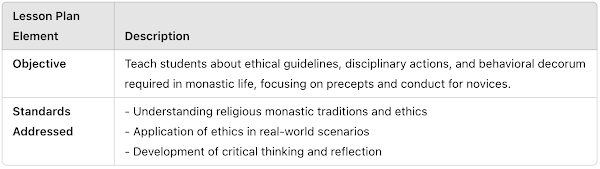
နိင်ငံခြားသားများ သာသနာတော်ကို ဝင်ရောက်လိုတဲ့အခါမှာ အထောက်အကူဖြစ်စေဖို့ရာရည်ရွယ်ချက်နဲ့ Criculum on Monastic Precepts and Conduct for Novices ဆိုတဲ့ ခေါင်းစဉ်နဲ့ စာအုပ်တစ်အုပ်( အမှန်တော့ စာအုပ်ထက်ပိုတဲ့ လုပ်ငန်းစီမံချက်များဖြစ်ပါတယ်) စတင်ပြုစုဖို့ရာ တာဆူနေပါတယ် Topic: Introduction to Monastic Precepts and Rules for Novices Objective: To teach novices the ethical guidelines, disciplinary actions, and behavioral decorum required in monastic life.
စာမျက်နှာ တော့ ဒီတစ်ခါလဲ ၄၂၀၀ ကျော်နေမယ်လို့မှန်းရပါတယ် တစ်ချို့ ဖြုတ်သင့်တာလေးတွေဖြုတ်ဦးမှပါ။ အခုလုပ်နေတဲ့ Program မှာ 1. A monastic life skills workshop 2. A monastic mentorship 3. A documentary series exploring the lives of novices in diverse Buddhist monastic orders. 4. A monastic-inspired mindfulness app 5. A comparative study of monastic traditions 6. A podcast interviewing former and current monastics 7. Industrial Visit ( သင်္ကန်းချုပ်တဲ့စက်ရုံကလူတွေကို ဖိတ်ခေါ်တာလဲဖြစ်နိုင်ပါတယ်) 8. Field Visit စတာတွေကို ပါထည့်သွင်းစဉ်းစားထားတာမို့ Activities တွေ Workshop တွေ ကျပန်းစကားပြောတာတွေ အပြင် A monastic-themed escape room ပါထည့်ဆွဲထားတော့ အတော်လေးတော့အချိန်ပေးရမှာပါ ဆရာကိုင် လမ်းညွန် တပည့်ကိုင် ညွန်းတမ်းစာအုပ် သင်ထောက်ကူ မေးခွန်းနဲ့အဖြေ တွေအပြင် ဖြစ်နိုင်မယ်ဆိုရင်တော့ Teaching Management Class room Management Mediation Skills Teacher Training စတဲ့ Framework တွေအထိ Working Plan ချထားပါတယ် ။ ကူညီအားဖြည့်ပေးနိုင်မဲ့နောင်တော်ကြီးများ အသိပညာရှင် အတတ်ပညာရှင်များအား ဖိတ်ခေါ်အပ်ပါသည်။ Sao Dhammasami Teaching with Compassion .

Rules for novices

Maintenance Announcement

We would like to inform you that our website will undergo scheduled maintenance to improve your overall experience. During this time, the website will be temporarily unavailable.We apologize for any inconvenience this may cause and appreciate your understanding. Our team will work diligently to complete the maintenance as possible. Once the maintenance is complete, the website will be fully operational, with improved performance and security. Thank you for your continued support!

အကျွန့်ဆုတောင်း

Group Work and Presentation လေးတွေလုပ်ကြ ခန္ဓာ ဖွဲ့ကြ အာယတန ခွဲကြ ငြင်းကြ ဟုတ်တယ်လို့ထောက်ခံကြ မဟုတ်ဘူးလို့ ရဲရဲတင်းတင်းထောက်ပြကြရင်း အချင်းချင်းကြားထဲ သင်ယူမူပေါ့ စာသင်သားအချင်းချင်းဆိုတော့ ပိုရှင်းပြဖို့ မေးဖို့ ဆွေးနွေးဖို့ ရဲတင်းကြတယ်ပေါ့ စိတ်ပါဝင်စားမူ မြင့်တင်လာတယ်ပေါ့ Critical and Logical အားကောင်းလာတယ်ပေါ့ Apply ဘက်ကိုပိုပြီး တွန်းအားပေးဖ​ြ်စတဲ့ သူတို့အသက်အရွယ်နဲ့ ညီမျှတဲ့ ဆွေးနွေးမူ တင်ပြမူ တစ်ယောက်ယောက်က ရှေ့ထွက်ပြီး Presentation လုပ်နေတဲ့အချိန် သေသေချာချာ လေးလေးစားစား မျက်စိရော နားရော အတွေးတွေရော Presenter တွေဆီစုပြုံရောက်နေဖို့ Presentation မလုပ်ခင် ဘွဲ့နာမည် စသည် မိတ်ဆက်တတ်ဖို့ အချင်းချင်း ကြားထဲမနာလိုစိတ်မဖြစ်စေပဲ ၈ုဏ်ယူတတ်ဖို့ လေ့လာ အတုယူတတ်ကြဖို့ အလှည့်ကျ တာဝန်ယူမူ ၀ိုင်းဝန်းပံ့ပိုးမူ In charge တစ်ပါးက Process improvement တွေကို ဆင့်ကဲ စုပေါင်း ဆွေးနွေးမူပေါ့ ဘာတွေသင်ခန်းစာရလိုက်တယ် ဘယ်လိုတွေခံစား၇တယ် ဘယ် လိုအတွေ့အကြုံ (ခါးသီးတဲ့ အရာဖြစ်ဖြစ် အမှတ်ရစရာကောင်းတာလေးပဲဖြစ်ဖြစ်) ဆွေးနွေးကြရင်း ဆရာနဲ့ တပည့်ကြားဖြစ်ဖြစ် သီတင်းသုံးဖေါ်အခြင်းခြင်းကြားထဲဖြစ်ဖြစ် သူတို့ပြောလို့ အဆင်ပြေတဲ့ ကိစ္စလေးတွေ ရင်ဖွင့်ကြ ခွင့်လွတ်ကြ သတိထားကြ ....... သင်ခန်းစာရလိုက်တာတွေ သင်ယူမူရလိုက်တာတွေကနေ ဘ၀မှာ ဘယ်လိုပြန်အသုံးချစရာရလိုက်တယ်ပေါ့ ဇာတကတစ်ပုဒ်လေးပဲဖြစ်ဖြစ် ဝါကျတစ်ကြောင်းလေးပဲဖြစ်ဖြစ်ပေါ့.... သတိရပါတယ်...... တစ်နေ့တော့ ပြန်လုပ်နိင်ဦးမှာ ပါ စာသင်ရင်း Personal Growth ပါ တပြိုင်နက် ပေါ့ သူတို့အတွေ့အကြုံတွေကို နားထောင်ပေးတာ ဝေငှခွင့်ပြုတာ စသည်စသည်ပေါ့... ကာလာ စုံလေးတွေနဲ့ ထင်ထင်ခြားခြား ကွဲကွဲပြားပြားနဲ့ ရှင်းလင်းမူဖြစ်အောင် ကာလာပရင်တာလေးတွေ ပလပ်စတစ်လောင်းတဲ့ စက်လေးတွေ အချိန်ကတော့အတော်ပေးရတာပေါ့ Topice တစ်ခု သင်ပေးဖို့ အနည်းဆုံး teaching Aid တွေ Lesson Plan တွေပြင်ဆင်ရတာ နေရာထိုင်ခင်း Setting တွေ EHD တွေ ချိန်ညှိရတာတွေကတော့ အတော်လေး ပေးရတာပေါ့....။ ပြင်ဆင်မူ ပေါ့ပေါ့တန်တန်(စေတနာ) အားနည်းရင် ဝိရိယအားနည်းရင် အဲဒီနေ့ရဲ့ သင်ခန်းစာမှာ မျော်မှန်းတဲ့ Goal ကို Meet မဖြစ်သွားတာမျိုး ..... စာသင်ခြင်းအနုပညာ ဟာ ပန်းတိုင် ရည်မှန်းချက် ရည်ရွယ်ချက် ရည်ရွယ်ချက်ကိုရောက်အောင် ပံ့ပိုးပေးတဲ့ သင်ခန်းစာပလန်တွေ သင်ထောက်ကူပစ္စည်းတွေ စေတနာတွေ ဝါသနာတွေ နဲ့ ဟန်ချက်ညီအောင် သွားကြရတဲ့ ခရီးဖြစ်လေတယ် စာဖြေရမှာ ကြောက်နေတဲ့ ကလေးတွေကို မဲလိပ် နှိပ်တဲ့ပုံစံမျိုး နဲ့ သင်ကြားတတ်မြောက်မူကို Run through အကဲဖြစ်တာမျိုး ရေးဖြေဖြေခိုင်းတာမျိုး လွတ်သွားတဲ့နေ့ရဲ့ သင်ခန်းစာအတွက် Gurdianship ( Group leader , Second Leader) စသူတွေက တာဝန်ယူပြီး ဆွေးနွေပေးတာ review Excises လုပ်ပေးတာ memory Recall လုပ်ပေးတာ သူတို့အမှတ်ရဆုံးသင်ခန်းစာ အကြိုက်ဆုံးသင်ခန်းစာတွေကို ပြန်ပြောင်းပြောခိုင်းတာ မျိုးနဲ့ မရလိုက်တဲ့ သင်ခန်းစာတွေကို ရလာစေဖို့ စသည်ဖြင့် စနစ် နည်း ဗျူဟာ အမျိုးမျိုးချကာ ထောင့်ပေါင်းစုံဘက်ကနေ Educational Psychology သဘောသဘာ၀တွေ Child ဆိုလဲ သူ့ level CCA လေးကိုသုံးပေါ့ Adult Learner တွေအတွက်ကြတော့လ​ဲ သူ့ နည်းစနစ်နဲံသူပေါ့ တကယ်တော့ စာသင်ခြင်းဟာ အနုပညာတစ်ခုဖြစ်လေတယ် ပန်းပျိုးခြင်းဖြစ်လေတယ် သူတို့လွယ်လွယ်ကူကူ သင်ယူနိုင်အောင် လုံ့စိုက်ထုတ်ရမူ သူတို့လှလှပပ ဖွံဖွ့ံထွားထွား ရှင်ရှင်သန်သန်ဖြစ်လာဖို့ဆိုရင် အများကြီး ကြိုးစားအားစိုက်ခဲ့တဲ့ ဒီသင်ကြားပို့ချမူတို့သည် လွယ်ကူသော အကျင့် လျှင်မြန်သောအသိ တို့ဖြင့် အမတပြည်နန်းကို ရခြင်း ရောက်ခြင်း မျက်မှောက်ပြုခြင်းအတွက် အင်မတန်အားကြီးသော အကြောင်းအထောက်အပံသည် ဖြစ်ပါစေ...။

A Vision for Myanmar: Dream Number 9

In a vivid dream, I found myself witnessing the future of Myanmar—a future filled with hope and transformation. A distinguished representative of the state was being welcomed to a sacred site, a relic that symbolized the rich heritage of the nation. As I traveled toward this location, the landscape shifted dramatically. The infrastructure around me reflected the hallmarks of a developed country: towering buildings, pristine streets, and a vibrant, bustling atmosphere. The people were dressed in radiant clothing, embodying a high standard of living and a profound sense of peace. Suddenly, the roar of airplanes overhead drew my attention. I looked up to see several aircraft soaring through the sky, and to my astonishment, they began releasing a flurry of papers that drifted gracefully downwards. I reached out, and one of these papers landed in my hand. The words inscribed upon it resonated deeply within me: **Union, Solidarity, State Law and Order Restoration, Peace, Development, Sustainable Country**. Each word carried a promise—a vision of a harmonious future for Myanmar. However, as I continued my journey, a stark contrast unfolded before me. I found myself witnessing zones of conflict, where civil wars raged and communities were torn apart. The intensity of the fighting was palpable, with both sides equally matched, each vying for dominance. It seemed as if this was the final struggle, the ultimate test of strength, with uncertainty hanging in the air. In that moment, I felt a surge of determination. To end this cycle of violence, I envisioned a powerful act—a bomb symbolizing not destruction, but the potential for change. I launched it toward one of the factions, and to my amazement, the explosion did not bring chaos but a profound stillness. In the aftermath, the fighting ceased; a quiet emerged, enveloping the land. As peace settled over Myanmar, I could see a new dawn rising on the horizon. The nation, once fractured, began to unify. Through genuine mediation and the principles of true Dhamma, Myanmar emerged as a beacon of hope and a superpower in the world. The message from the sky had been received—a call for collaboration and understanding, a pathway to a sustainable and prosperous future. This dream, a narrative of transformation, reflects the potential that lies within Myanmar—a reminder that even in the depths of conflict, peace can blossom through unity and compassion.

A Series of Five Dreams: Royal Echoes from the Past

Dream 1: 


The Queen’s Letter and the Past Life Connection In the first dream, I found myself transported to an era long past, during the reign of Queen Victoria. The setting was formal, almost like an archive, where important records were being kept. I observed data analysis reports, meticulously written under a citatory column, much like what one might see in an old newspaper. The subject of the reports was unusual, focusing on the Burmese military. I read through the names of ministers and generals, their biographies carefully documented. The atmosphere was heavy with importance, as though these records held great weight. Amidst the papers, I saw something unexpected — a letter written by Her Majesty Queen Victoria herself. It was a birthday letter, addressed not to a figure from history but to someone who seemed strangely familiar. As I read the letter, I realized that the birthday mentioned did not match my own in this life. Yet, it felt as though the letter was meant for me. Could this be a sign of a connection from a past life? The thought lingered in my mind, a sense that perhaps I had known Her Majesty in another time, another existence.

 Dream 2: 


The King’s Frustration and My Defense In the second dream, I found myself in the presence of a king. He was reviewing a notebook filled with notes and data. I sensed that this data was somehow related to me, though I wasn’t sure how. As the king scrutinized the information, his demeanor changed. His brow furrowed, and frustration built within him. Suddenly, he pointed to the notebook and yelled, "You are a beggar!(Monk)" His words echoed through the space, harsh and accusing. But I stood my ground. I knew the data he had received was wrong, and I felt compelled to defend myself. "I am not a beggar, i am just a monk " I said firmly. My words were calm but resolute, a clear rejection of the king’s misunderstanding. The tension between us hung in the air, but I knew the truth of my own worth, regardless of his misjudgment.

 Dream 3: 


The King’s Offer and the Strain of Obligation In the third dream, the same king appeared again. This time, his demeanor was different, less angry, more thoughtful. He approached me with an offer. He said he could give me financial support if I wished — money or something else I might need. Yet, even as he made the offer, I sensed a pressure weighing on him, as if this gesture was not entirely voluntary but born out of some deeper obligation or tension between us. His offer, though generous, felt heavy, as though there were strings attached, unseen forces at play influencing his actions. I could feel his conflict, and though he was trying to be kind, the pressure in the air made it difficult for me to accept the offer easily. It wasn’t just about money or support; it was about the unspoken bond between us that seemed to be pulling him into this situation. 

 Dream 4: 

The King’s Withdrawal and the Uncertainty of Understanding In the fourth dream, the king once again entered the scene, but this time his attitude was entirely different. He seemed distant, almost disinterested. There was a process, some important matter, in which he had previously been involved, but now he wanted no part of it. He sat back, his face clouded with uncertainty. I could tell that he was frustrated by something he did not fully understand — some key indicator, some crucial detail that escaped his comprehension. Because of this confusion, the king decided to withdraw. He no longer wished to engage in the process, feeling that without a complete understanding, it was better to step away. His decision felt final, as if he had resigned himself to the fact that this situation was beyond his grasp. 

The Fifth Dream

In this dream, my father summoned me to attend a meeting. I arrived at a place where a large gathering of people were already seated, waiting for the meeting to begin. Among them, I too sat, anticipating the arrival of the meeting's president. After a few minutes, the doors opened, and my father entered the room. But as I looked closely, I realized that it wasn't my father—it was His Majesty, the King. The transformation of my father into the King was profound. In this moment, it felt as though a connection between us transcended the present life, as if we were linked as family in a previous existence—father and son, perhaps. This dream stirred deep emotions and evoked a sense of recognition, as if it was revealing something important about the bond we shared, not just in this life, but in lives before. The reason for such a dream, I believe, is not arbitrary. It feels like a message—a concept meant to be conveyed to me, guiding me to reflect on the deeper connections we carry with us through the cycle of rebirth.

Dream Number 7: The Cave of Relics and the Warning of Preservation

One night, in the stillness of my sleep, a familiar presence appeared in my dream — a famous monk, revered by many, though he had passed away a year ago. His face was calm and serene, as it had always been in life. Without speaking, he gestured for me to follow him. 


We walked together, our steps light and purposeful, as he led me towards a mountain. At its base was a cave, dark and ancient, hidden within the mountain’s belly. I could sense the weight of history in the air, the kind that lingers in places long forgotten by the world. 

 At the top of the mountain, I could see the ruins of old stupas, though only their foundation blocks remained. The structures, once grand, had been eroded by time. Yet, their significance was still felt, as if they held a sacred power. Inside the cave, I was surprised to find a large gathering of people. Their eyes were fixed on me and something that glimmered softly in the dim light — relics. These were not just ordinary relics; they radiated with a presence that commanded reverence and awe.

 But soon, the calmness in the cave began to break. People started arguing, their voices rising in heated tension. The air filled with hostility as they debated which nation had the right to claim ownership of the relics. It was as if ancient rivalries had been reignited, and their desire for power and control overshadowed the sanctity of the space. Just as the conflict was about to erupt into violence, the monk raised his hand and spoke. His voice was like a bell ringing through the cave, silencing the chaos. "All of you," he said, "do you even know the moto and principal of these relics?" His question cut through the room like a sharp blade. Everyone stood still, listening intently. "If anyone here tries to step forward in greed or claim ownership, they will pay the price. A hand raised to take what does not belong will be cut off. A foot stepping where it should not tread will be severed. This is the law — the code of preservation and protection.

 The guardianship of these relics is not to be challenged." The weight of his words hung heavy in the air. The crowd seemed to shrink under the warning, understanding the severity of their actions. Suddenly, a princess approached me, her face anxious yet determined. She took hold of my hands and, with urgency in her voice, said, "We have official communication between you and our people. I must be first in priority. Do not forget this." Her request was clear — she sought to secure her place in line, to ensure that her nation’s interests were recognized above all others. 

 As I pondered her words, the monk gently reminded me of my purpose. "There are others waiting for you inside the cave," he said. "You must meet them. This is your first meeting, and they have awaited your arrival for a long time." He guided me further into the cave’s depths, where the light grew dimmer, but the sense of mystery and anticipation deepened. As I stepped into a deeper chamber, I was greeted by an unexpected sight — a Yakkhā, a fierce guardian spirit, appeared before me, his form both menacing and majestic. He showed me his face, as if to mark our encounter, then vanished as quickly as he had appeared. 

Following him came another guardian spirit, an ārakkha devatā, who materialized to acknowledge my presence and the significance of my journey. Finally, a young man appeared. His face was familiar, yet distant, as if from a time long ago. He greeted me warmly, though it was clear this was our first official meeting. There was an air of recognition between us, as if we had been connected for many years, perhaps even from a time when I was still very young. 

This meeting had been long awaited, and now it was finally taking place. Before I could speak, the monk’s voice echoed in my mind. "This is a warning," he said. "The guardians are watching, and the preservation process is in place. If anyone violates the sanctity of these relics, the standard operating procedures will be activated immediately. There will be no hesitation, and the consequences will be swift." I woke from the dream, the monk’s words still resonating within me. It was not just a message for me, but a warning to all — a reminder that sacred things must be protected, and those who seek to disrupt their preservation will face dire consequences. The relics, the cave, the guardians — they were all part of a larger force that existed beyond our understanding, a force that would not be compromised.

Dream Number 6: A Democratic Transition in Peril

One night, I found myself in a dream, standing in the grand hall of a government building. The air was thick with anticipation, the kind that hangs in the room during historic moments. A democratic government was making its official transition — an old president, worn by years in office, stood ready to hand over power to a newly elected leader. The handshake was firm, formal, and broadcasted for all to see. It symbolized the peaceful transfer of power, a hallmark of democracy. The room was filled with dignitaries, officials from both the upper and lower houses, gathered to witness this significant moment. The old president, though tired, carried a sense of relief in his eyes, as if a weight had been lifted. The new president, however, stood stiff and uneasy, their face showing a mixture of pride and burden. The applause that followed the handshake felt hollow, as if those in attendance sensed the uncertainty that lay ahead. As the dream unfolded, I realized this wasn’t just a normal transition of power. This was something bigger, something that affected not just the country but the world. The setting wasn’t an Asian nation; it felt distinctly like a superpower in the West. The architecture, the people, the way they carried themselves — this was a country that had long stood at the top of the global hierarchy. Yet, despite their electoral victory, the new government appeared fragile. The celebration of winning the election quickly faded into the background as the weight of governance set in. I could feel the tremors of the problems they were about to face. A human power shortage gripped the administration — seasoned officials had either retired or resigned, leaving the new government scrambling to fill key positions. There was no longer enough expertise, no longer enough strength to manage the country’s affairs. Financial crises loomed on the horizon, dark and threatening. The economy was on the verge of collapse, and the government’s resources were rapidly dwindling. Even the best economists in the room could not seem to find a way out. The country, once a pillar of global stability, now seemed to be falling apart at the seams. It was as if the very foundation of power was crumbling, and everyone knew it, though no one dared to speak of it. The upper house and lower house, now filled with newly elected representatives, were weak and divided. Their inexperience showed as they fumbled through legislative debates and attempted to pass laws. Every issue, every problem felt insurmountable — from healthcare to education, from energy to national security. And while the new government had won the election, it was clear that victory in the polls did not translate to the capacity to govern. In the dream, I watched as the new president, standing tall before the nation, was slowly weighed down by the enormity of the task ahead. The handshake had marked a peaceful transition, but it had also signaled the beginning of a new era of uncertainty. The country was struggling, and there were no easy answers. The superpower I was witnessing seemed to be entering a period of deep instability. I woke from the dream with a sense of unease, knowing that even the strongest nations are not immune to the challenges of leadership. The dream was a reminder that democracy, while powerful, requires more than just an election to succeed. It requires wisdom, strength, and resilience — qualities that, in my dream, seemed in short supply.

The Vision of His Holiness Pope : A Dream for World Peace

In the stillness of the night, a dream unfolded—a vision that carried a message both profound and unsettling. In this dream, a conflict had erupted, its flames spreading across lands and communities. Amidst the chaos, a nation or group sought to take His Holiness Pope , not as a conqueror might seize a trophy, but in a way that symbolized the fragility of peace itself. The Pope, a symbol of unity, compassion, and peace for the Christian communities and the world, stood at the center of this storm. In my dream, the forces pulling him in represented more than just a political or national struggle. They embodied the world's yearning for peace, yet also its potential to stumble into the depths of conflict. As I watched, I could feel the weight of this moment. The Pope , who had long been a voice for the downtrodden, a beacon of hope for the marginalized, and a respected figure to people of all faiths and cultures, was caught in the tensions of the world. He was a peace agent, not for one faith or one country, but for humanity. His gentle, compassionate spirit reminded us all that peace, once threatened, must be fiercely protected and nurtured. But the dream carried with it a warning—that in times of division, even the most revered symbols of peace could be drawn into turmoil. My heart filled with both hope and fear, yearning for the world to understand the preciousness of peace before it was too late. Yet, I refuse to believe that this dream is destiny. I pray it is a call to action, a message to the world. Pope Francis, and those like him who work tirelessly for peace, must not be dragged into the conflicts of our making. We must listen to their words, honor their efforts, and unite behind their mission of reconciliation and love. We must rise above the conflicts that divide us and see each other through the eyes of compassion. Let this dream, Dream Number 4, serve as a narrative for the future—a plea for peace, understanding, and unity. Let us stand together, as one human family, and ensure that the world remains a place where symbols of peace are cherished, not endangered. May this message reach every corner of the globe and inspire each of us to be agents of peace in our own lives. For in the end, peace begins with each of us. 

Note: His enemy mean The Death !

Dream Number 3 - A Wish for His Majesty the King

In the year 2025, I find myself filled with a deep sense of hope and reverence as I wish His Majesty the King freedom from all physical and mental suffering. May his life be blessed with health and peace, for he embodies the strength and wisdom of a leader who carries the weight of a nation with grace. I have come to know that, in moments of respite, His Majesty chooses to spend his time under the Bodhi Tree—a sacred symbol of enlightenment and tranquility. This gesture resonates deeply with me, for the Bodhi Tree holds a powerful spiritual significance, a reminder of the Buddha’s journey to awakening. Under its branches, the King seeks the same peace and reflection that millions before him have sought—a space where the burdens of the world fall away, and only stillness remains. In my dream, I see His Majesty sitting in meditation beneath the Bodhi Tree. The sunlight filters through the leaves, casting a soft glow around him, as if nature itself is offering its blessings. There is a profound calm in the air, the kind that comes when one is in the presence of something truly sacred. His posture is steady, his breathing peaceful, and his expression serene. It is as though the tree itself imparts wisdom and healing, easing the challenges he faces both as a ruler and as a human being. I wake from the dream with a heart full of gratitude and compassion for His Majesty. I send out a silent prayer that, in the days and years ahead, he may continue to find solace and strength in the sacred spaces he cherishes, and that his journey, like the Buddha’s under the Bodhi Tree, be one of continued awakening, peace, and enlightenment.

My Dream Number 2 - The Buddha Tooth Relics

In my dream, I encountered an old lady who appeared to be from one of the colder, western nations—a figure who exuded a sense of deep wisdom and serenity. Her aura was calm yet powerful, and she carried with her an air of reverence. What struck me most was that in her hands, she held numerous Buddha tooth relics. 


They seemed to glow with a soft, ethereal light, as though they were imbued with the essence of something sacred and timeless. As I observed her, I realized that she was a preserver of these relics, protecting them as though they were the world's most precious treasures. There were so many—perhaps over twenty—each one unique, yet all connected by their divine origins. I felt a deep sense of awe and wonder in her presence, as if I was standing before an embodiment of history, faith, and spiritual power. In the dream, we stood side by side, participating in a public speaking event, something like an interview or a TV show program. As we spoke, I felt a strong connection to her, as though our paths were somehow intertwined by a common purpose. It was as if she had received the same spiritual message as I had, and that our meeting was no coincidence. She showed me the relics with pride and care, and I could sense that these sacred items carried stories, lessons, and blessings meant for the world. There was an unspoken understanding between us. I believed that she, too, might have experienced dreams like mine—dreams filled with messages, signs, and symbols connected to the Buddha’s relics. Our bond in that moment felt timeless, transcending the limits of space and time. I woke from the dream with a feeling of peace, knowing that one day, in this life or another, I might meet her and together we would share the meaning behind those relics and the messages they carry for humanity.

Through Time and Dreams!

From a young age, I found myself in possession of numerous Buddha relics, a gift as unexpected as it was profound. These relics came into my life without warning, and soon after, I began experiencing vivid dreams—dreams that revealed ancient stupas and sacred places linked to the origins of the relics. In some of these visions, I saw in my dream glimpses of past lives, where I seemed to have a deep connection to the very relics in my hands. Other times, the dreams would foretell future events, presenting challenges or moments I had yet to encounter. As time passed, many of these precognitive dreams came true, guiding me in ways I could not have anticipated. This led me to ponder the source of these visions. Were they the result of the relics’ power, perhaps acting as a spiritual guide? Or was it something deeper, an unseen influence steering my path, allowing me to access realms beyond the ordinary, tied to a larger cosmic truth? With each fulfilled dream, my bond with the relics deepened. They seemed to be more than objects of reverence; they carried within them a mystery that transcended time, offering glimpses of both the past and the future. And with that, I continued on my journey, wondering if these sacred relics were not only markers of history but also the keys to unlocking the unfolding story of my own life.

75 Sekhiya Rules

Categorized into three main sections: Proper Conduct in Public, Proper Behavior During Meals, and Teaching and Proper Communication. This chart and table are dedicated to my teacher, whose instruction made this possible. With Respectfully Sao Dhammasami

The Buddha Tooth Relics and Sao Dhammasami

One peaceful night, after receiving a precious Buddha Tooth Relic, Sao Dhammasami sat in quiet meditation. The weight of the ancient relic filled him with a deep sense of reverence and responsibility. That night, as he lay down to rest, a vivid dream swept him into another time, another world. In his dream, Sao Dhammasami found himself standing before an ancient stupa, its structure bearing the distinct style of Gandharan art—elegant, yet weathered by time. The stupa stood tall and majestic, its surface adorned with carvings that whispered stories of devotion and faith. As he moved closer, he could feel an invisible force beckoning him to step inside. He entered the stupa and found himself in a vast, circular chamber. The air felt sacred, and the space inside was illuminated by a soft, ethereal glow. The chamber was large enough for him to walk freely, yet the energy of the place was centered on something grand at the heart of the stupa. Sao Dhammasami’s eyes were drawn to a pedestal at the center of the room, upon which rested two glowing objects. His breath caught in his throat as he realized what they were—two more Buddha Tooth Relics, their presence radiant, filling the space with a divine aura.
The relics shimmered in the dim light, their brilliance beyond the material world. They seemed to pulsate with an ancient energy, as if they held the wisdom of countless ages. Sao Dhammasami could feel their significance; these relics were not mere artifacts, but living symbols of the Buddha’s eternal presence. They had found their way here, to him, through a mysterious and sacred connection. Beside the relics lay an ancient coin or medallion, its surface worn yet unmistakably precious. The coin seemed to be from the Kushan dynasty, a time long past but forever linked to the spread of Buddhism. Sao Dhammasami could see the image of a ruler on one side, regal and dignified, while the other side bore a sacred symbol—a deity or a representation of faith. This coin, too, held a story, perhaps one of a time when kings and emperors sought to align their rule with the divine teachings of the Buddha.
As he stood before these relics, Sao Dhammasami felt a powerful message within the dream. The two Buddha Tooth Relics were destined to come into his care, just as the first had. The ancient stupa, the shining relics, and the Kushan coin all pointed to a destiny woven by the hands of history and karma. It was a sign, a vision of what was to come. The dream lingered as Sao Dhammasami woke, the vivid details still fresh in his mind. He sat in silence, contemplating the profound vision. The Buddha Tooth Relics had a journey of their own, and they were destined to be with him, their guardian. The ancient coin, a relic from a time when Buddhism flourished across empires, was a reminder of the sacred responsibility he bore.

In the days that followed, Sao Dhammasami carried the dream with him, knowing that it was not just a product of the night but a message from a higher realm. The relics would come, and with them, the ancient wisdom that transcends time, guiding him and those who would come to honor the sacred remains of the Buddha.

အမှာကံ ဗုဒ္ဓဓာတုဿ ဂန္ဓကုဋိသ္မိံ အာရက္ခ ပုဂ္ဂလာ.....

Amhākaṃ buddhadhātussa gandhakuṭismiṃ ārakkha puggalā, ārakkha bhikkhū, ārakkha devatā, nāgā, supaṇṇā, kumbhaṇḍā, yakkhādi puggalā ca averā hontu, abyāpajjā hontu, anīghā hontu, sukhī attānaṃ pariharantu, dukkhā muccantu, yathāladdhasampattito māvigacchantu, kammassakā. အမှာကံ ဗုဒ္ဓဓာတုဿ ဂန္ဓကုဋိသ္မိံ အာရက္ခ ပုဂ္ဂလာ, အာရက္ခ ဘိက္ခူ, အာရက္ခ ဒေဝတာ, နာဂါ, သုပဏ္ဏာ, ကုမ္ဘဏ္ဍာ, ယက္ခာဒိ ပုဂ္ဂလာ စ အဝေရာ ဟောန္တု၊ အဗျာပဇ္ဇာ ဟောန္တု၊ အနီဃာ ဟောန္တု၊ သုခီ အတ္တာနံ ပရိဟရန္တု၊ ဒုက္ခာ မုစ္စန္တု၊ ယထာလဒ္ဓသမ္ပတ္တိတော မာဝိဂစ္ဆန္တု၊ ကမ္မဿကာ။

Conflit Resolution Methodology

ဘုရားရှင်ရဲ့တရားကို ဘယ်လိုလူမျိုးမဆို ထိတွေ့ကျင့်သုံးခွင့်ရတယ် ခွဲခြားထားတာမျိုးမရှိဘူး အခွင့်ရေးတန်းတူရကြတယ်။ ဘုရားရှင်ဟာ diversityကိုလက်ခံတယ် inclusive ဆိုတာကိုသိပ်ကြိုက်တယ် Non discrimination ကို Promote ပြုတော်မူတယ်။ ဒါဟာ ကမ္ဘာကြီးကအခု တလောလူပြောသူပြောများနေတဲ့ Human Rights and Peace Building ဆိုတာပါပဲ အရာရာတိုင်းက တူညီနေမှာတော့မဟုတ်ဘူး မတူညီဘူးဆိုတာကို လက်ခံဖို့လိုတယ်။ We are difference, သို့ပေတည့် ဓမ္မအမြင်နဲ့ ရူမြင်သုံးသပ်တဲ့အခါ တူညီတဲ့ ကိလေသာ အာရုံတွေ အပေါ် စရိုက် ဘာသာ သဘာ၀ အရတုန့်ပြန်တာတွေ တစ်ဦးနဲ့တစ်ဦး မတူကွဲပြားခြားနားကြပါတယ်။ မတူညီတဲ့အရာတွေအပေါ်မှာ အခွင့်အရေးတန်းတူပေးဖို့လိုမယ် ဆိုတဲ့ စိတ်နဲ့ မြတ်စွာဘုရားရှင်ကိုယ်တော်မြတ်ကြီးဟာ ကမ္မဌာန်းနည်းတွေ အမျိုးစုံကို နည်းပြတော်မူခဲ့ပြီး ခွဲခြားဆက်ဆံတာမျိုးမလုပ်ခဲ့သလို Conflit Resolution Methotology ဆိုတာကြီးကို လှလှပပ ဟောပြတော်မူလေတယ်။ အတွင်း အပြင် အတွင်း အတွင်း ကြားထဲ ဖြစ်ပေါ်တတ်တဲ့ ဓမ္မသဘာ၀တွေကို ဗောဓိ ပက္ခိယ ဆိုတဲ့ ခေါင်းစဉ်အောက်မှာ Sub Title တွေအလိုက်ထည့်ကြည့်လိုက်တာ ခြံရံရမဲ့ သဘောတွေ လုံ့လပြုရမဲ့အရာ အားတင်း တွန်းတိုက်မူပေးရတာတွေ စသည်စသည်.... ကျေးဇူးများမြောင် တော်မူသော အဆုံးအမတော် တို့ မူလပိုင်ရှင် ဖြစ်တော်မူငြား ထိုဘုရားအား ရိုသေမြတ်နိုးရှိခိုးပါ၏ ဘုရား